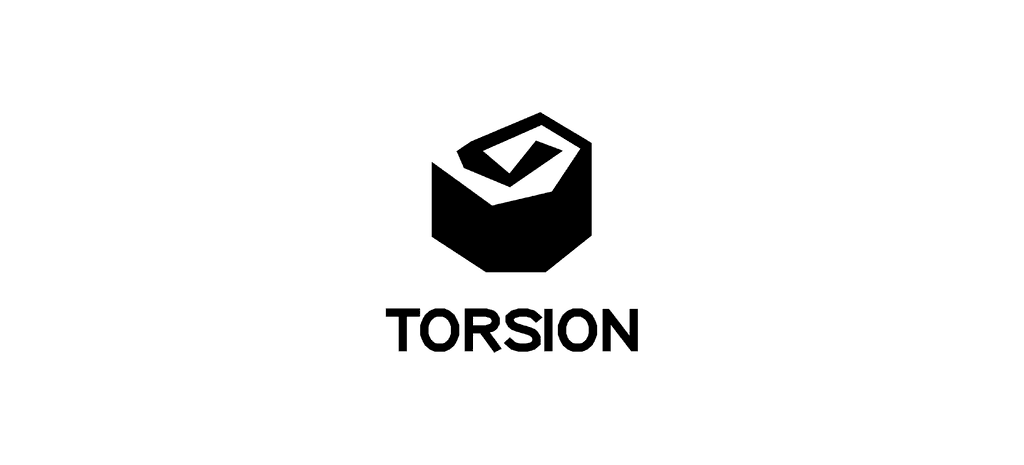
The goal of this project was to translate abstract, technical ideas: torsion, rotational force, and Kozyrev mirror geometry, into a visual identity that felt intuitive rather than academic. Torsion needed a brand that suggested motion and time distortion without turning into a literal physics diagram, while still feeling playful and accessible through a retro gaming lens.
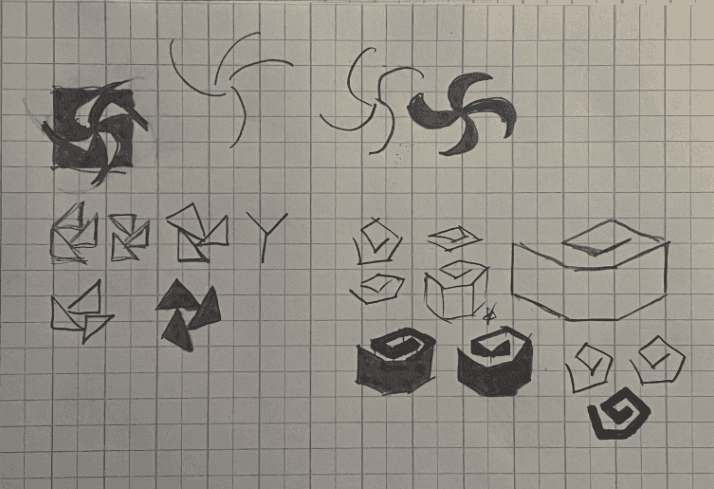
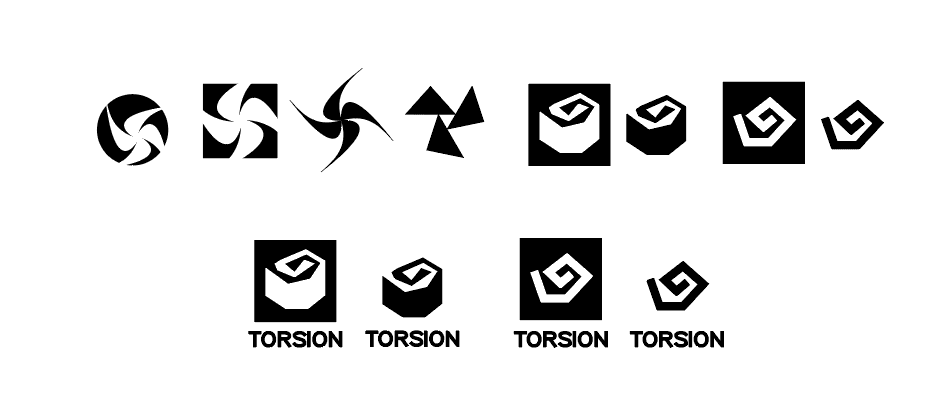
I approached the solution through reduction. The Kozyrev mirror was simplified into a compact, angular form that implies rotation, compression, and directional flow. Sharp edges and limited curvature reinforced the concept of torque while aligning with the graphic constraints of early PlayStation visuals. That same logic guided the entire system, from initial sketches and vector icons to logo animation and 3D assets.
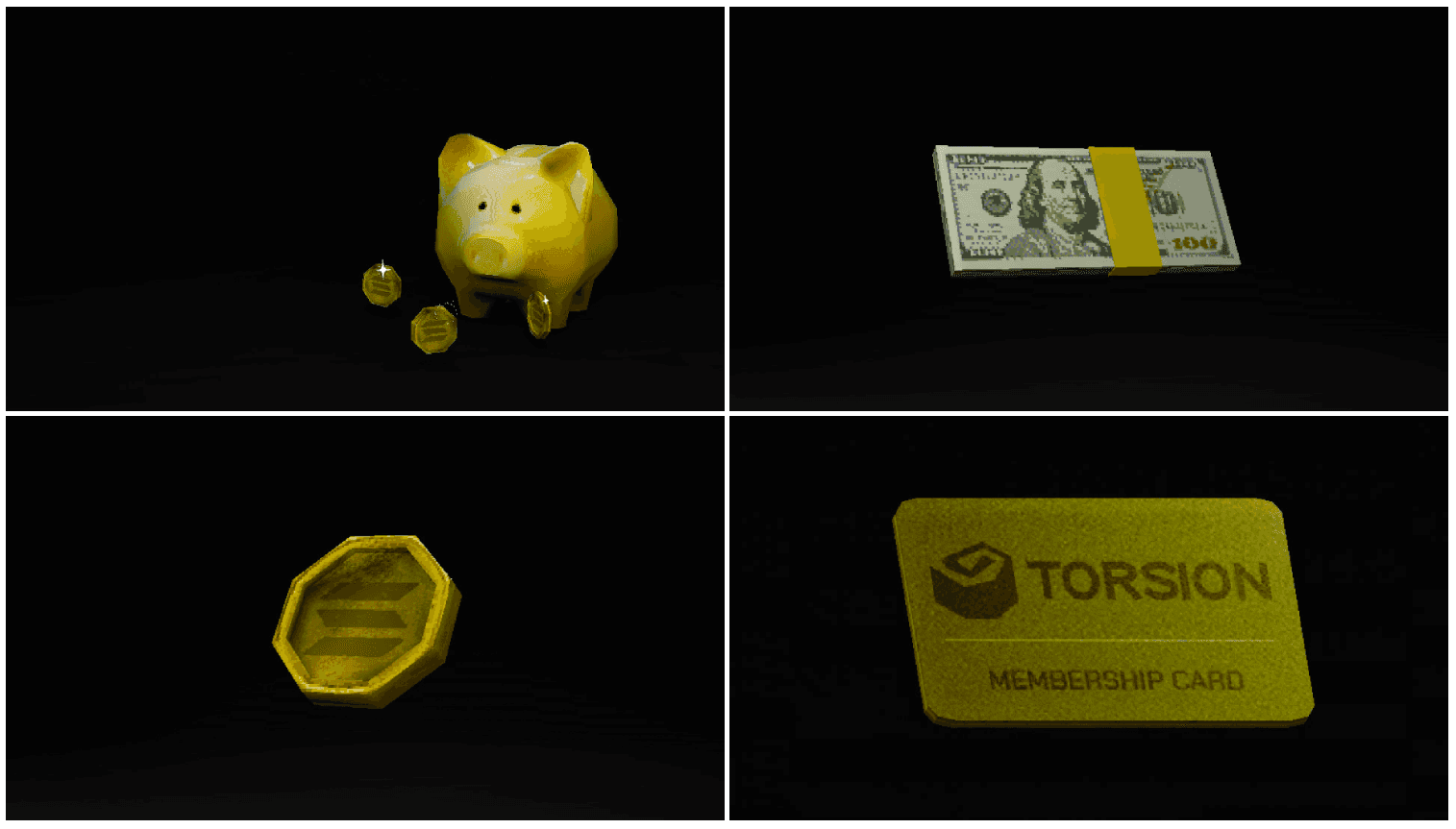
For the 3D work, I intentionally kept poly counts low and relied on custom material nodes to achieve the desired look. The challenge wasn’t complexity, but cohesion-making sure every asset felt like it belonged to the same visual world as the logo. Retro limitations became design rules: strong silhouettes, simple shaders, and animation timing that feels mechanical and deliberate, similar to early console startup screens.
By grounding the identity in three core ideas: motion, geometry, and nostalgia, where the brand remained cohesive without feeling overdesigned. Even simple objects, like coins or membership cards, reinforce the same visual language and sense of controlled movement.
This project reflects my approach to design: distilling complex concepts into clear, functional systems that connect graphic design and 3D into a unified brand experience.